8 Baby Crochet Patterns to Make
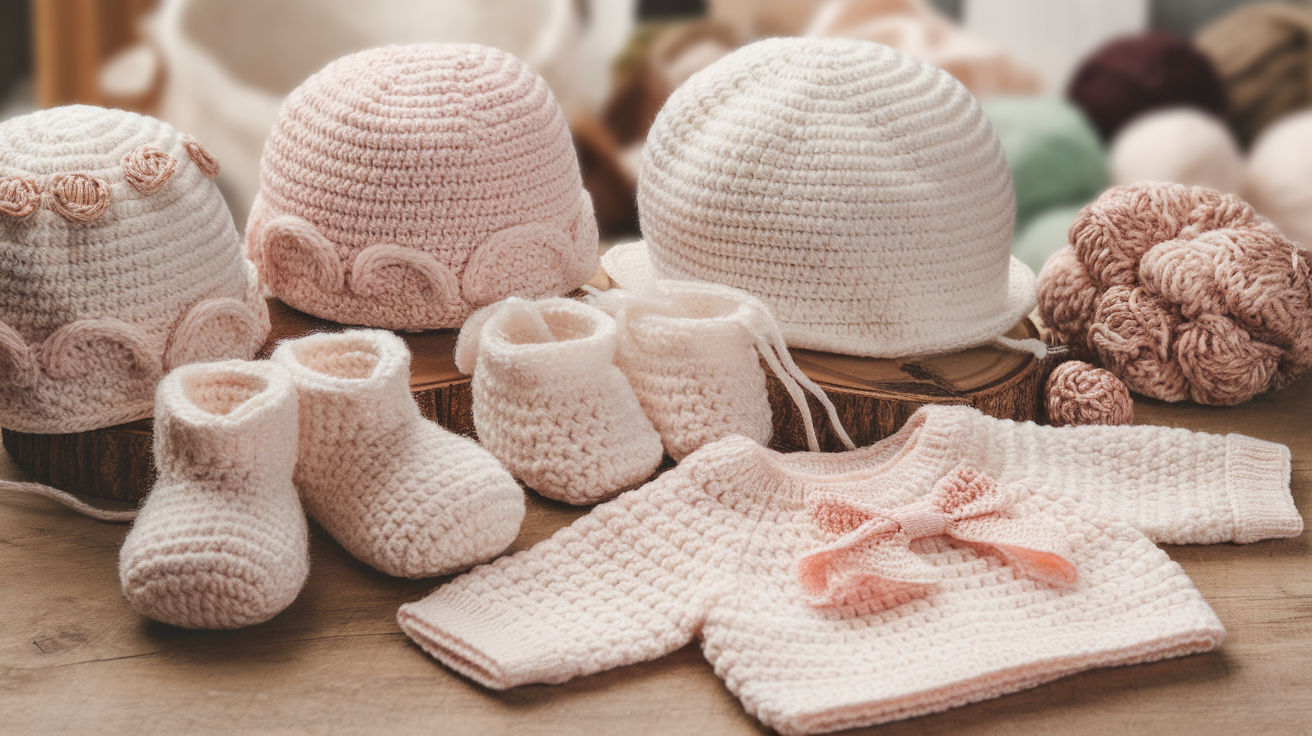
These baby crochet patterns offer a useful mix of sweaters, rompers, vests, bonnets, and tiny shoes, with options for different seasons, skill levels, and gift ideas. From quick projects that use little yarn to more detailed garments, each design has a different reason to add it to your crochet queue.
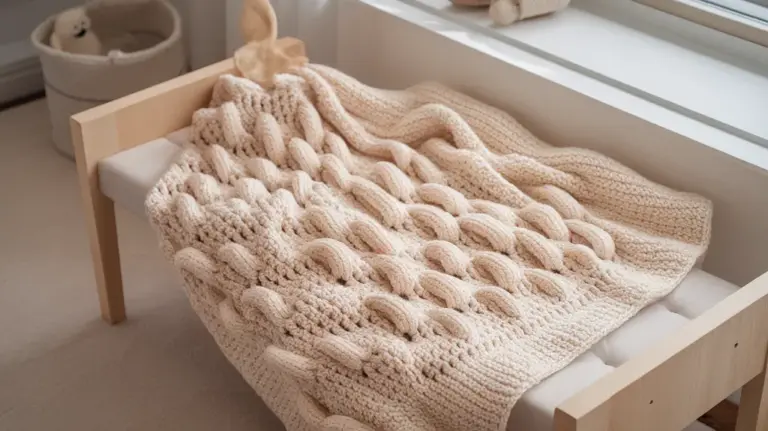
Baby crochet projects can be especially rewarding because they are small enough to finish without the commitment of a large garment, yet they leave plenty of room to experiment with color, texture, and construction. If you’re planning several handmade pieces for a new arrival, a garment can also be paired with a larger project such as this crochet baby blanket free pattern.
The eight ideas below were selected for variety rather than simply filling a list. You’ll find everyday clothing, layering pieces, accessories, and gift-friendly projects, with verified details from the original designers so you can decide which one fits your plans best.
1. Little Cookie Crochet Baby Romper
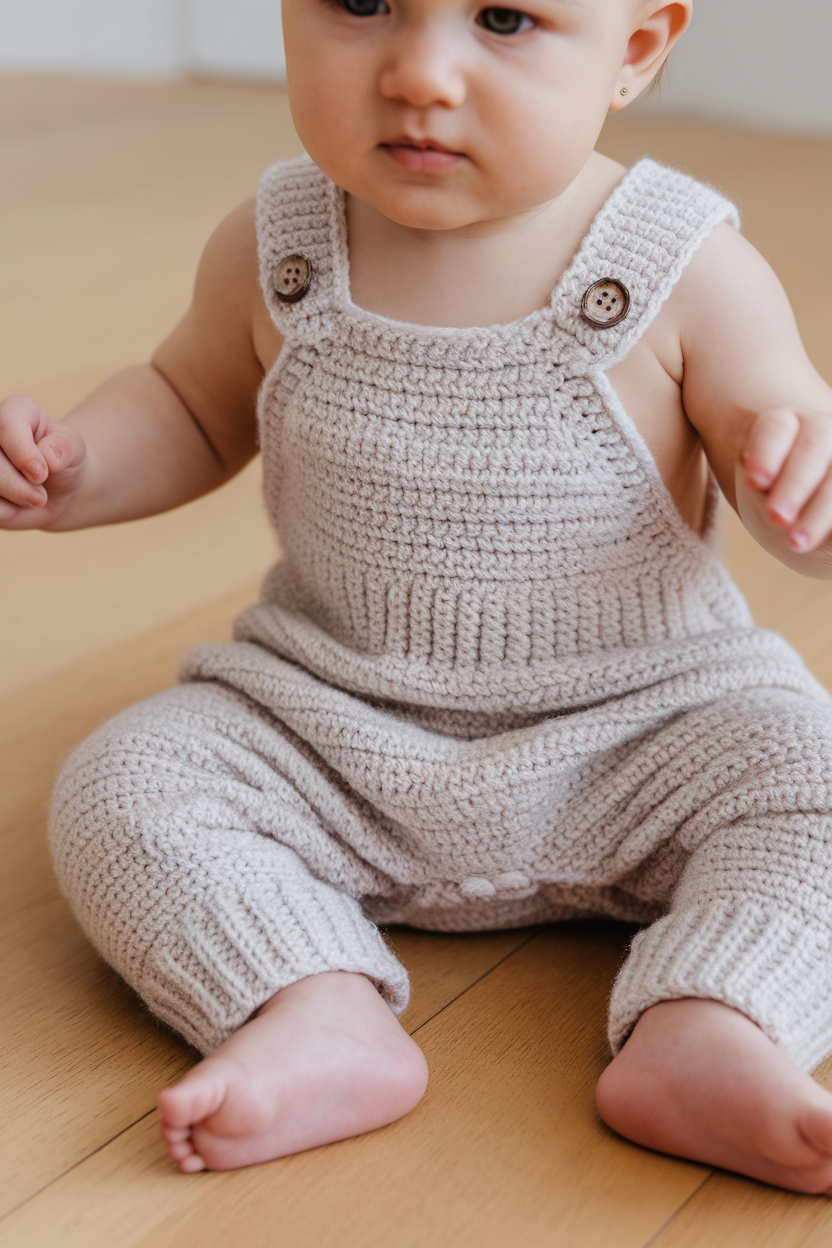
A romper is one of the most useful pieces to make when you want a handmade garment that can become part of an everyday outfit. The Little Cookie Romper from Doroteja of Croby Patterns has a classic shape with a ribbed waist, ribbed leg openings, straps, and button details. Its straightforward styling makes it easy to imagine in a neutral shade or a brighter color.
The free version is available in the 0–6 month size, while the designer also offers a 6–12 month size in the PDF version. The design uses aran-weight yarn and 3.5 mm and 4.5 mm hooks, and the construction is divided into manageable sections rather than requiring one complicated piece. That makes the Little Cookie Crochet Baby Romper pattern worth considering if you want a practical project with enough shaping to stay interesting.
Because the romper uses buttons on the straps, take care with secure finishing and follow the original designer’s instructions when completing those details.
2. Little Granny Vest
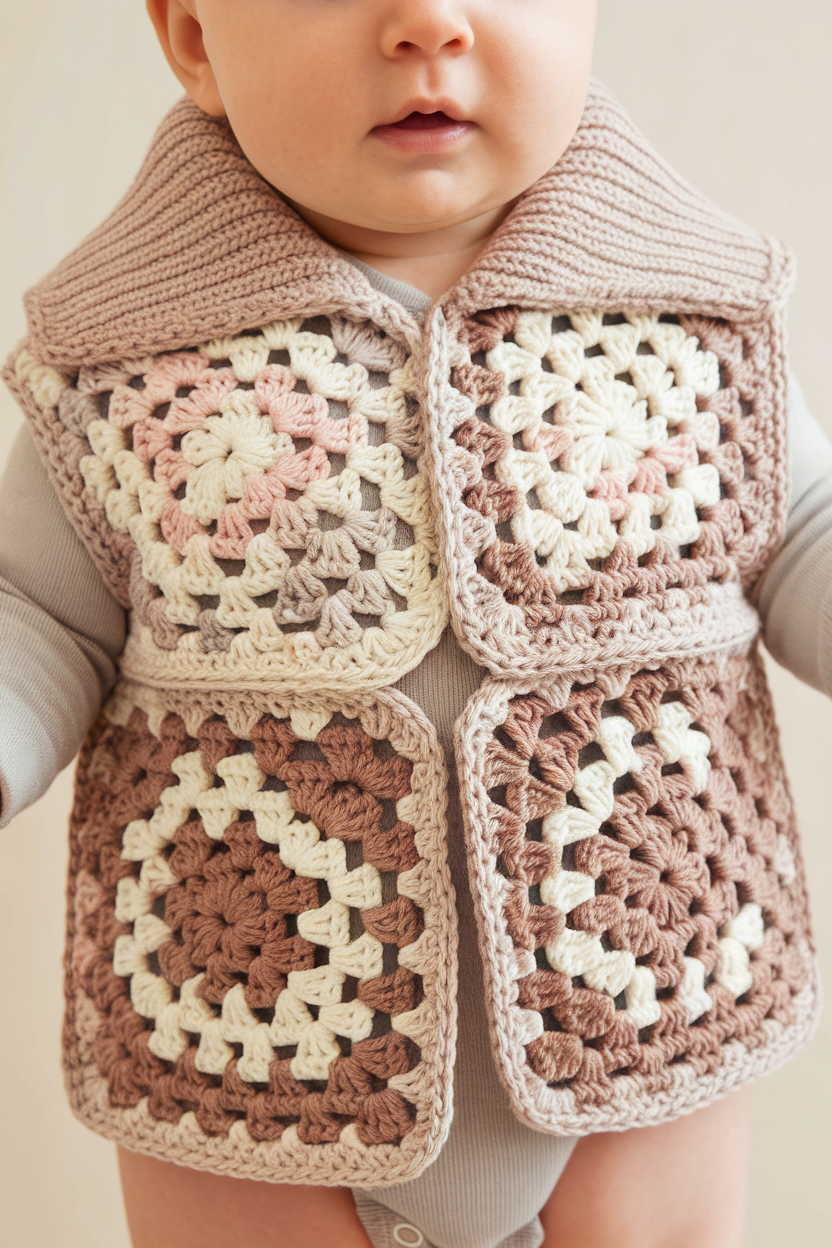
Two classic granny squares become a surprisingly wearable baby garment in Croby Patterns’ Little Granny Vest. Instead of looking like a miniature version of a complicated sweater, the design relies on a simple construction that makes the granny-square motif the main feature.
This is particularly appealing if you enjoy playing with color. The original design uses DK-weight yarn and a 5 mm hook, and the free written version covers 0–6 months, with a larger 6–12 month size available in the PDF. The finished measurements are given by the designer, which is useful when choosing between the available sizes rather than relying only on a baby’s age.
Side buttons also make the vest easier to open for dressing. If you want a lightweight layer that can be worn over a simple outfit, the Little Granny Vest pattern offers a distinctive alternative to a traditional cardigan.
3. Stash Yarn Baby Cardigan
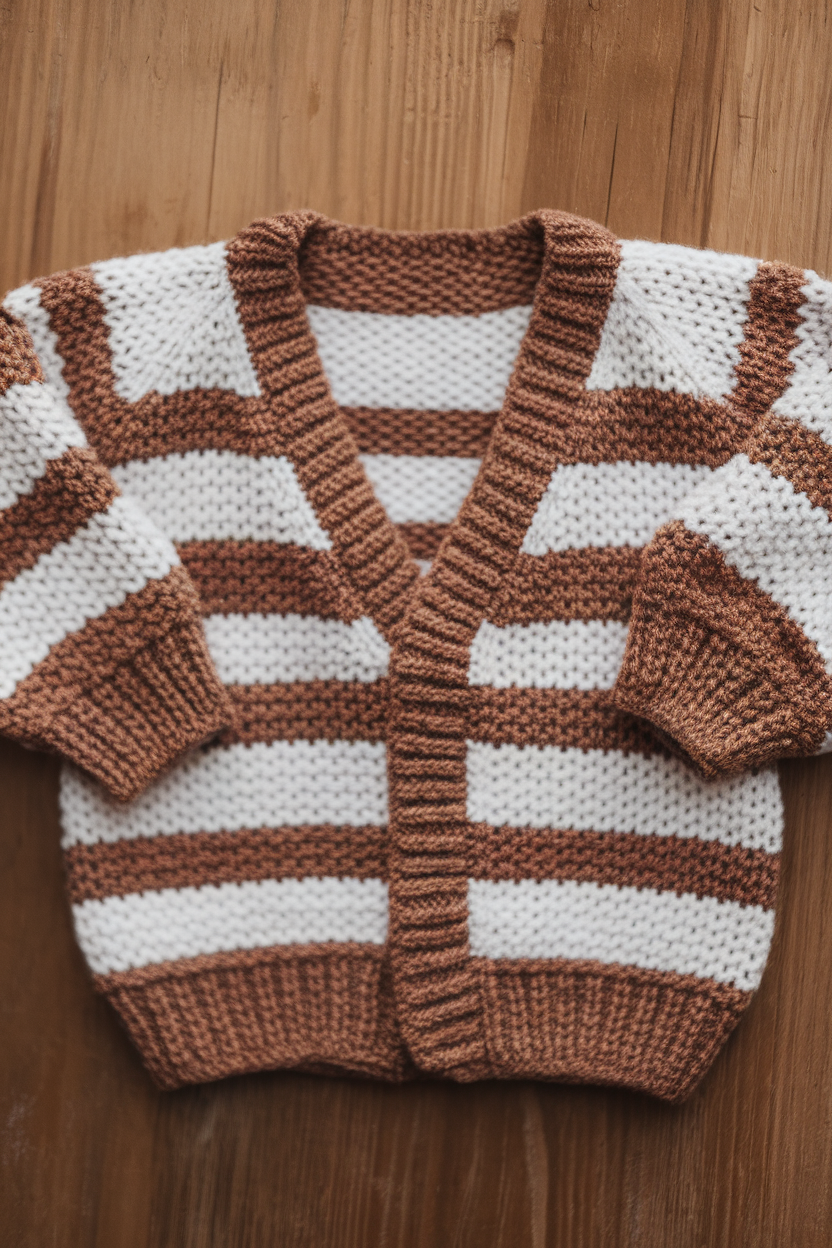
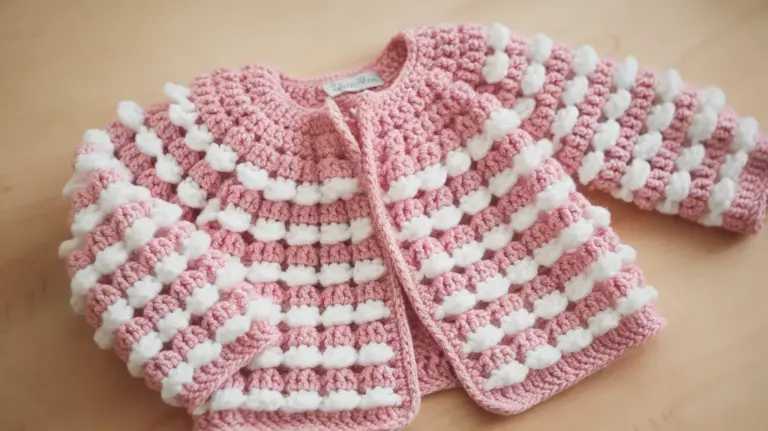
Sometimes the best baby project is the one that helps you use yarn you already have. Lynne Rowe’s Stash Yarn Baby Cardigan is designed with that idea in mind, using relatively small amounts of DK yarn and allowing for a single color, leftovers, stripes, or a gradient effect.
The cardigan is worked from the neck down in rows, with the yoke shaping the front, back, and sleeve openings before the body is continued. That construction keeps the garment relatively streamlined and avoids complicated seaming. The original pattern is available in two finished sizes: a preemie/newborn size with a 40 cm finished chest and a 3–6 month size with a 46 cm finished chest.
It’s a sensible choice when you have several coordinating leftovers rather than enough of one color for a larger garment. The Stash Yarn Baby Cardigan pattern also uses only about 55–60 g of DK yarn, according to the designer, making the project particularly interesting for a small stash-clearing session.
4. Into The Woods Baby Sweater
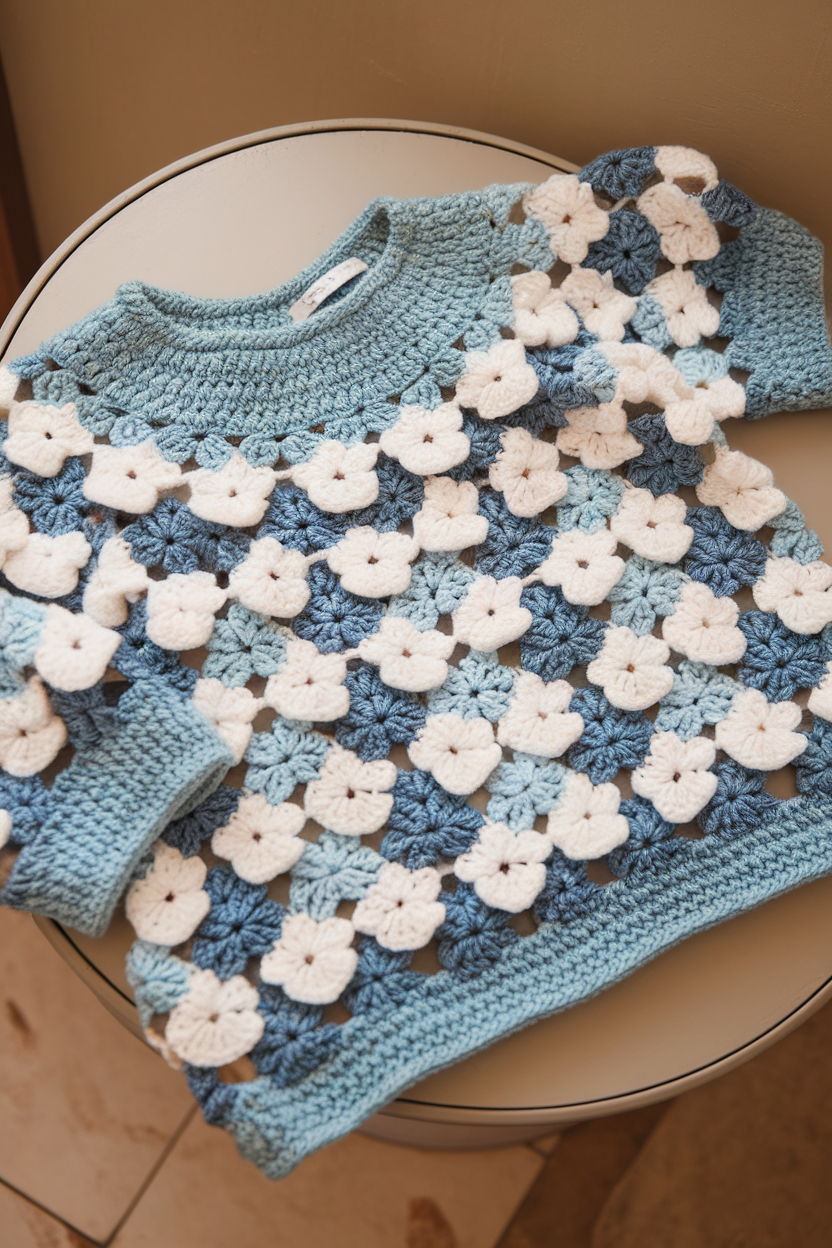
For crocheters who want a baby sweater with more visual character, Into The Woods by Doroteja of Croby Patterns takes a different approach. The original design was inspired by embroidered floral sweaters, with the decorative elements giving a simple garment a more distinctive handmade feel.
The pattern uses fingering-weight Drops Flora yarn with 3.0 mm and 3.5 mm hooks for the different parts of the sweater. The designer provides finished measurements for the 0–6 month version, including a 40 cm chest and 22.5 cm length. Basic crochet stitches are enough to complete the design, so the interest comes more from the construction and decorative colorwork than from learning a long list of complicated stitches.
If you are looking for a project that feels more special than a plain baby pullover, the Into The Woods baby sweater pattern is a strong option. The fingering-weight yarn also gives it a lighter feel than a chunky winter sweater, making it useful when you want a delicate handmade layer.
5. Easy Baby Romper Set
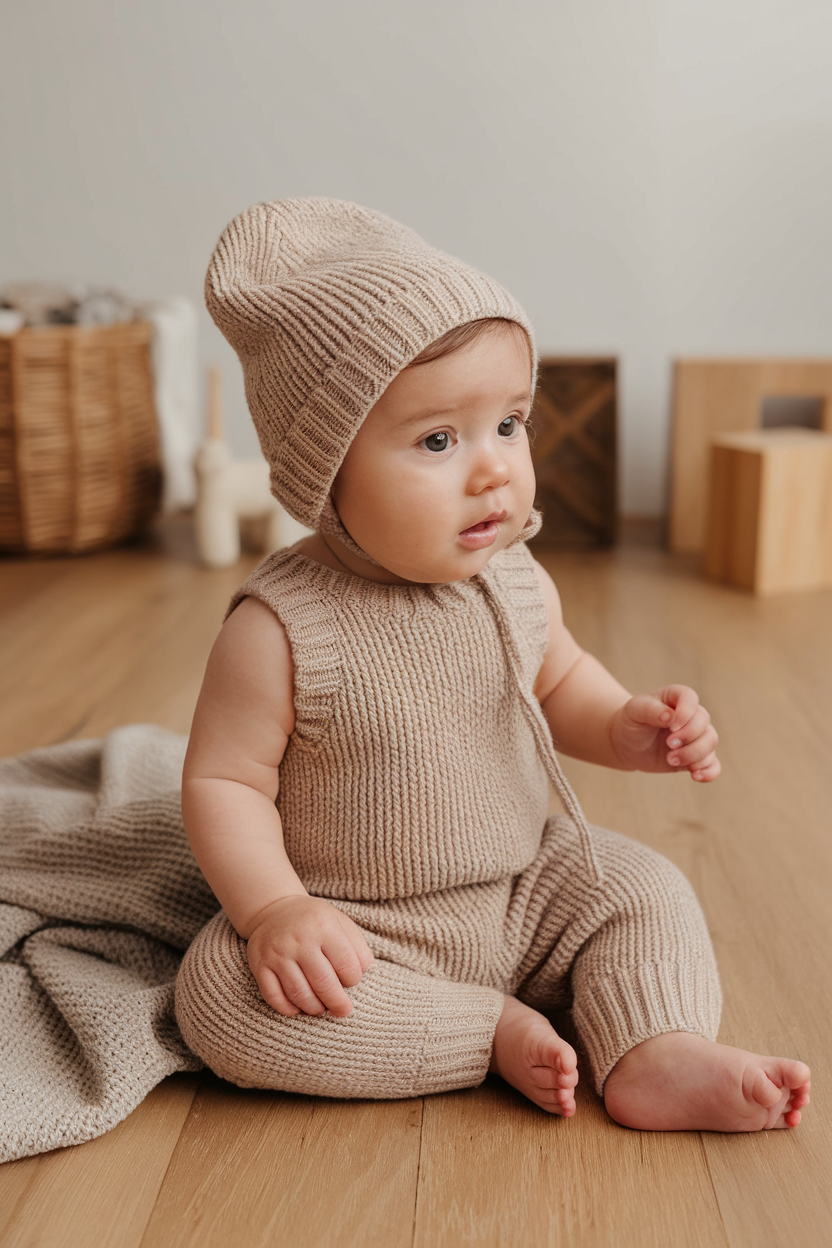
There is something convenient about getting two coordinated pieces from one project. KnitPal’s Easy Baby Romper Set combines a textured romper with a matching baby hat, so it can work particularly well as a handmade shower or first-birthday gift.
The pattern is rated easy and uses DK-weight yarn with a 3 mm crochet hook. The romper is available in sizes from 3 through 24 months, and the designer provides finished chest and length measurements for each size. V-stitches and shell details give the outfit more texture than a basic single-stitch garment without making the overall design overly elaborate.
The broader size range is one of the main reasons to choose this project. Instead of being limited to a newborn-sized gift that may quickly be outgrown, you can select a size based on the finished measurements supplied by the designer. The Easy Baby Romper Set pattern also includes a video tutorial, which can be helpful if you prefer visual guidance while working through a garment.
6. Watermelon Bonnet
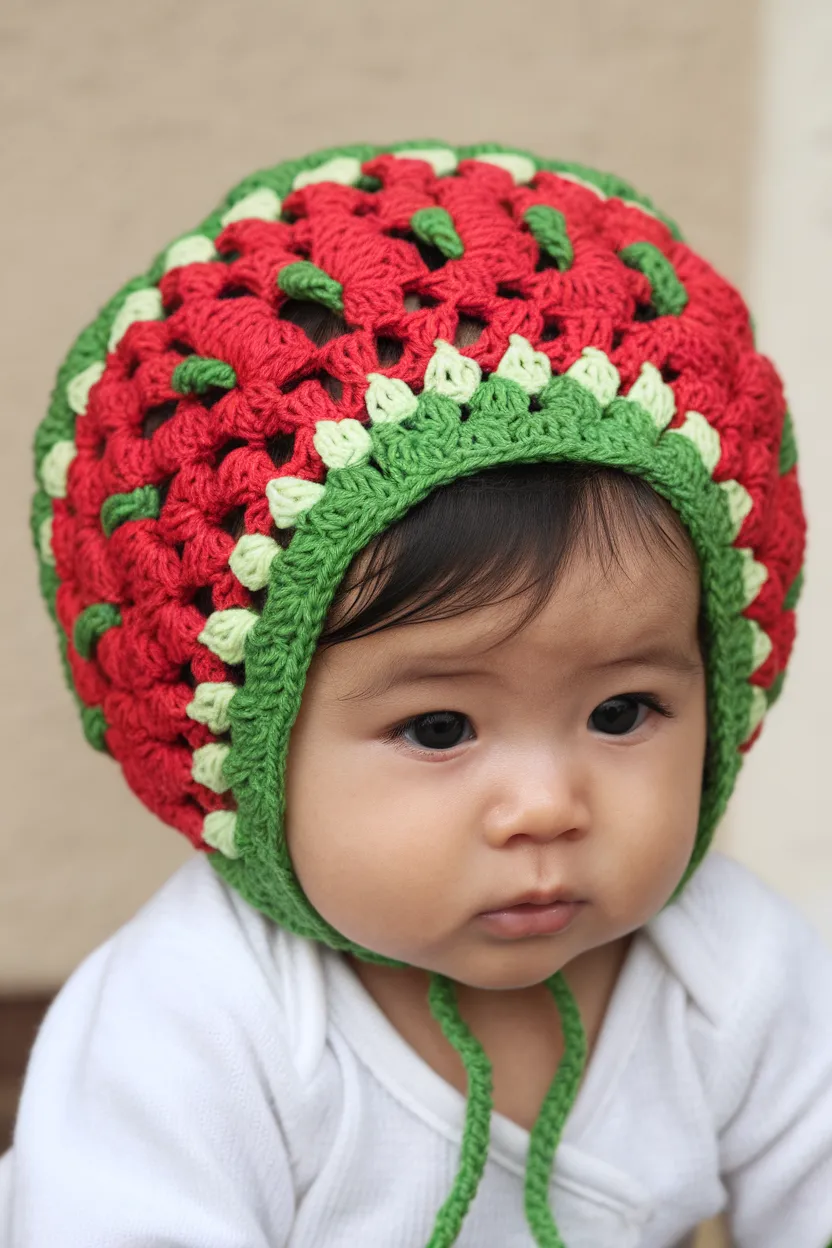
A bonnet can be a much smaller commitment than a sweater, making it an appealing choice when you want to crochet something for a baby without taking on a full garment. The Watermelon Bonnet from Baby Crochet Designs gets its character from granny-square construction and a ribbed edging, with the finished shape tied under the chin.
The pattern is offered in sizes 0–3 months, 6–12 months, and 1–4 years. The designer uses DK cotton yarn and 3 mm and 4 mm hooks, with less than one 100 g ball of yarn needed for each bonnet in the stated yarn. That makes it an approachable project for using a small quantity of yarn while still creating something visually distinctive.
The Watermelon Bonnet pattern is especially interesting if you like color-driven designs. The granny-square construction also gives you an easy opportunity to change the palette and create a completely different look without changing the basic concept.
7. Bunny Crochet Baby Booties
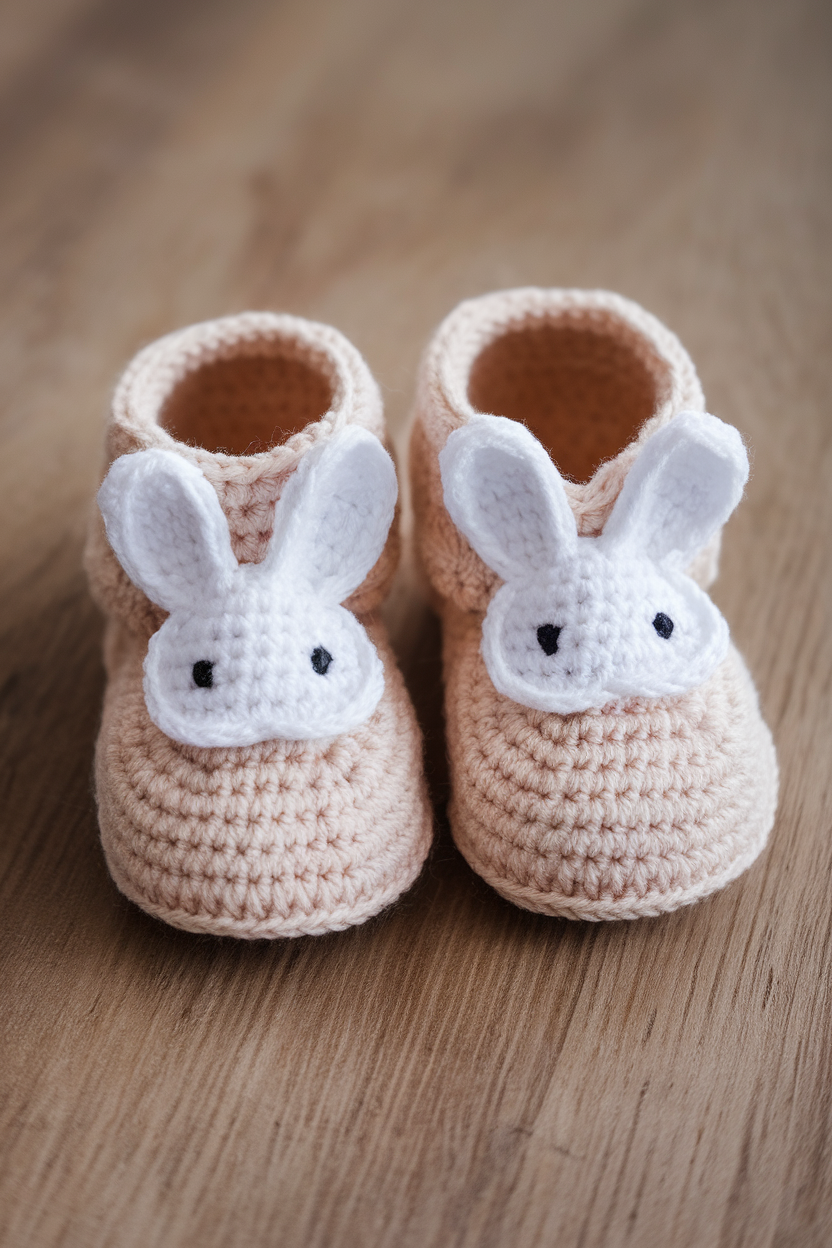
When you need a small handmade gift, baby booties can be far less time-consuming than a full outfit. These Bunny Crochet Baby Booties from Maisie and Ruth combine a simple shoe shape with a bunny applique, giving the finished pair a playful detail without requiring a large amount of yarn.
The pattern covers a remarkably broad range, from newborn through 4–5 years, with yarn weight and hook size changing according to the intended size. For the smallest sizes, the designer recommends DK/light worsted yarn, while larger sizes use heavier yarn. Finished sole lengths are also provided for each size, which is much more useful for choosing a size than assuming an age always corresponds to one particular foot measurement.
The project is rated easy and includes a video tutorial alongside the free written pattern. The Bunny Crochet Baby Booties pattern is a good choice when you want a relatively quick project that can stand on its own as a gift or become part of a larger handmade baby set.
8. Ruby Slippers Baby Shoes
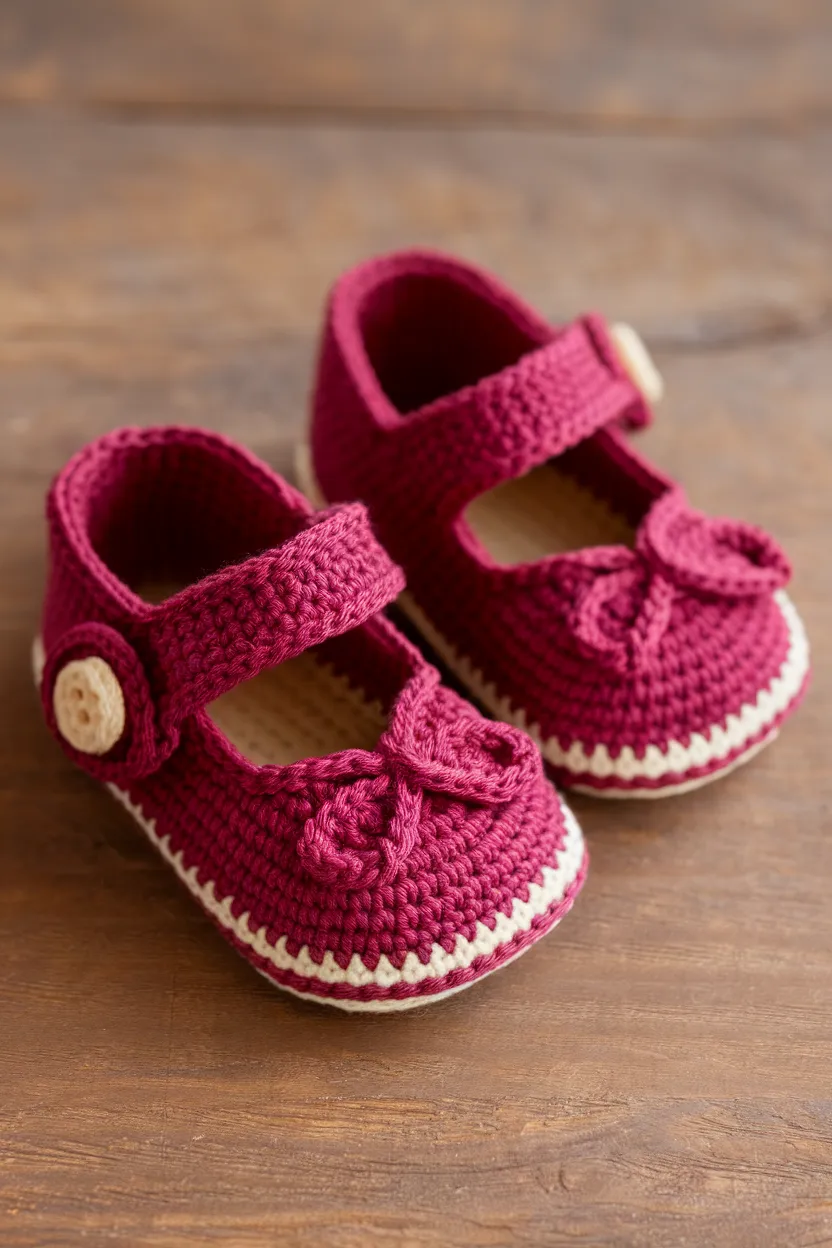
For a more classic-looking baby shoe, Croby Patterns’ Ruby Slippers have a simple strap-and-button design that gives them a little more structure than a basic crocheted bootie. The updated version begins with the sole and builds upward, with the two shoes sharing the same main construction before the strap placement creates the left and right versions.
The current free version covers 0–6 months, with a 6–12 month size included in the PDF. The designer lists DK-weight cotton yarn and a 3.5 mm hook, and the finished sole for the free size measures 9.5 cm. That finished measurement is worth checking before starting, particularly because baby footwear needs to be chosen by actual measurements rather than age alone.
One practical point stands out in the designer’s notes: crocheted shoes can be slippery and are not intended for babies who are walking or learning to walk. That makes these more appropriate as an early-stage baby accessory than as footwear for a newly mobile toddler. You can find the updated Ruby Slippers baby shoes pattern on the original designer’s website.
How to Choose Among These Baby Crochet Patterns
The right project depends less on which design looks cutest and more on what you actually need to make. For a wearable everyday garment, the Little Cookie Romper or Easy Baby Romper Set makes sense. If you want a light layer that can be added over another outfit, the Little Granny Vest is easier to work into a baby’s wardrobe.
For colder weather or a more traditional garment, the Stash Yarn Baby Cardigan and Into The Woods Sweater offer different approaches. The cardigan is especially useful when you have leftover DK yarn, while the sweater uses finer yarn and has more decorative appeal.
Smaller accessories are the better choice when time or yarn is limited. A bonnet or pair of booties can be finished much sooner than a full garment and can also be combined with another handmade piece to create a coordinated gift. Readers who want to explore more clothing ideas can continue with our collection of crochet baby clothes for additional garment styles.
Whichever project you choose, check the original designer’s sizing and finished measurements before starting. Baby sizes can vary considerably between patterns, so the measurement provided by the designer is a more reliable starting point than assuming a standard fit from the baby’s age alone.